Physiotherapist, Founder of Community Therapy
The Support at Home program is a structured way for older Australians to access funding for the services they need to live longer and better at home.
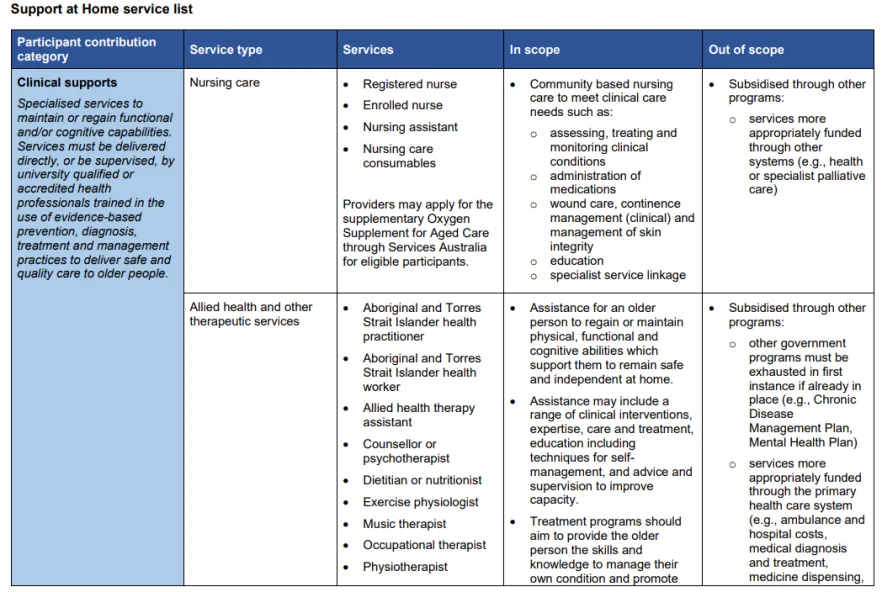
A key part of this system is the Support at Home service list — but what exactly is it, how is it used, and what does it mean for older adults and providers?
The Support at Home Service List — What’s Funded and What’s Not
Under the Support at Home program, there is a clearly defined list of approved services that can be funded and delivered by a registered Support at Home provider.
This service list outlines what types of supports are available and ensures that services delivered under the program are consistent and appropriate.
It is not to be confused with the Assistive Technology and Home Modifications (AT-HM) list.
What are the Six Service Streams?
| Stream | Purpose | Key inclusions | Key exclusions |
|---|---|---|---|
| 1. Clinical supports | Allied health and nursing services | OT, physio, speech pathology, dietetics, exercise physiology, podiatry, social work, psychology, audiology; nursing (wound care, medication, continence, palliative) | Unregistered practitioners; Medicare-covered services (GP, specialists); hospital services |
| 2. Independence | Personal and domestic tasks the person cannot safely perform alone | Personal care, mobility assistance, meal preparation, domestic assistance, shopping, minor safety-related home maintenance | Gardening beyond safety; general housekeeping unrelated to aged care needs |
| 3. Everyday living | Social participation and community connection | Social support, community access, transport, CALD language/cultural support, interpreter services | Entertainment with mainstream alternatives (cinema, sporting events); commercial transport |
| 4. Assistive technology and home modifications (AT-HM) | Equipment and home modifications for independence and safety | Mobility aids, bathroom/transfer aids, beds, daily living aids, cognitive/communication aids, continence aids; grab rails, ramps, non-slip surfaces, doorway widening | Mainstream consumer items; major renovations without clinical indication; items covered by NDIS or CAPS |
| 5. Restorative care | Time-limited programs to rebuild capacity and independence | Allied health-led programs (OT, physio, EP), goal-setting, outcome measurement, carer training, low-cost AT trials | Indefinite/maintenance therapy; supports not linked to documented restorative goals |
| 6. End of life pathway | Fast-tracked intensive support for people in their last ~3 months | Comfort-focused personal care, clinical supports, comfort AT/equipment, carer respite and training, short-term intensive coordination | Standard assessment wait times (bypassed); requires GP/specialist confirmation of prognosis |

Service List Exclusions
The Support at Home service list details the types of services which are included that can be funded under the Support at Home program.
If the service is not listed on the Support at Home service list, it is not eligible for funding under the Support at Home program.
Is There an Official Resource?
Yes, there is an official list available. Please view the below link:
How Are Services Selected for a Participant?
Every older adult receiving services under the Support at Home program works with a registered provider.
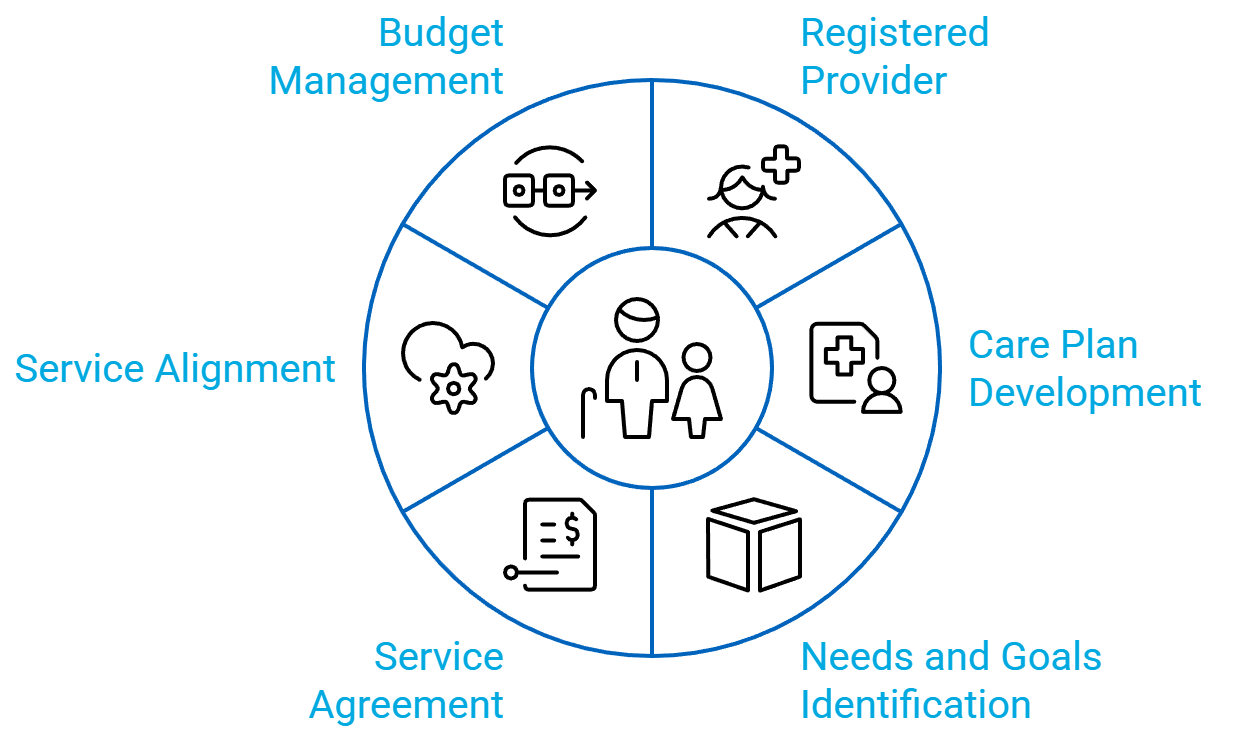
The registered provider:
- Supports the participant to develop a care plan.
- Uses the participant’s needs and goals to identify the right mix of services.
- Works collaboratively with the participant (and often their family or registered supporter) to develop a service agreement that outlines:
- What services from the approved list will be delivered.
- How often the participant will receive them.
The provider must ensure the services align with the service list and meet the participant’s goals within their allocated budget.
What Is a Provider?
Under Support at Home, “provider” can mean two things:
- Registered Provider
- Has completed the government’s auditing and registration process.
- Responsible for meeting the Aged Care Quality Standards.
- Oversees and coordinates a participant’s care plan.
- Associated Provider
- Is not registered.
- Delivers services on behalf of the registered provider through brokerage agreements.
- Can be a company or a sole trader.
The registered provider carries full accountability for the quality of the associated provider’s work.
Can a Participant Receive Support From Multiple Providers?
Officially, each participant has one registered provider. The Support at Home program is a single-provider model.

However, many registered providers don’t employ every type of worker needed—like gardeners, allied health clinicians, home modification specialists, or equipment suppliers.
To fill these gaps, they often broker services through other companies or sole traders. These additional service deliverers are known as associated providers.

Even though associated providers deliver the service, the registered provider remains responsible for:
- Service quality
- Compliance with the Aged Care Quality Standards
- Ensuring all services meet requirements under the Act
How Does a Registered Provider Know Which Services to Assign?
Before entering the program, a participant is assessed by an Aged Care Assessment Organisation.
The assessor completes the Integrated Assessment Tool—a comprehensive evaluation of a person’s needs, their goals and their functional capacity. This may include validated assessment measures that help determine what supports the person requires.
The registered provider then:
- Reviews this information
- Works closely with the participant (and family)
- Builds a more detailed care plan
- Determines the type, frequency, days, and times of services
- Ensures the plan fits within quarterly and annual budgets
The provider’s team usually includes both clinical and non-clinical staff, and the complexity of the participant’s needs determines which staff are involved in care planning.
Is There Risk in Using Multiple Allied Health Companies vs. One Multidisciplinary Service?
It’s difficult to generalise the risk. Both models can work well.

One organisation providing multiple allied health disciplines may offer:
- Easier communication between clinicians
- Streamlined documentation
- Simpler intake and invoicing
- Cohesive multidisciplinary care
- Lower compliance burden for the registered provider
- Lower administrative burden for the registered provider
- Clinical governance efficiencies and improvements
Using multiple separate providers may be required to:
- Ensure the right mix of skills and services are available
- Ensure service gaps are filled in regional, rural and remote regions
- Ensure there is risk management with respect to service availability and that wait times are effectively managed
How Does the Support at Home Service List Interact With Other Funding Mechanisms?
It does not interact with other funding programs.
The Support at Home service list applies only to the Support at Home program and has no connection to, for example, Chronic Disease Management Plans, Mental Health Care Plans or any other subsidy schemes.
How Do Services Change Over Time?
A participant’s supports will change as their needs change, regardless of whether their Support at Home classification level changes.
The registered provider and participant work together to:
- Adjust services as needs evolve
- Ensure supports fit within quarterly and annual budgets
- Follow rollover rules between quarters
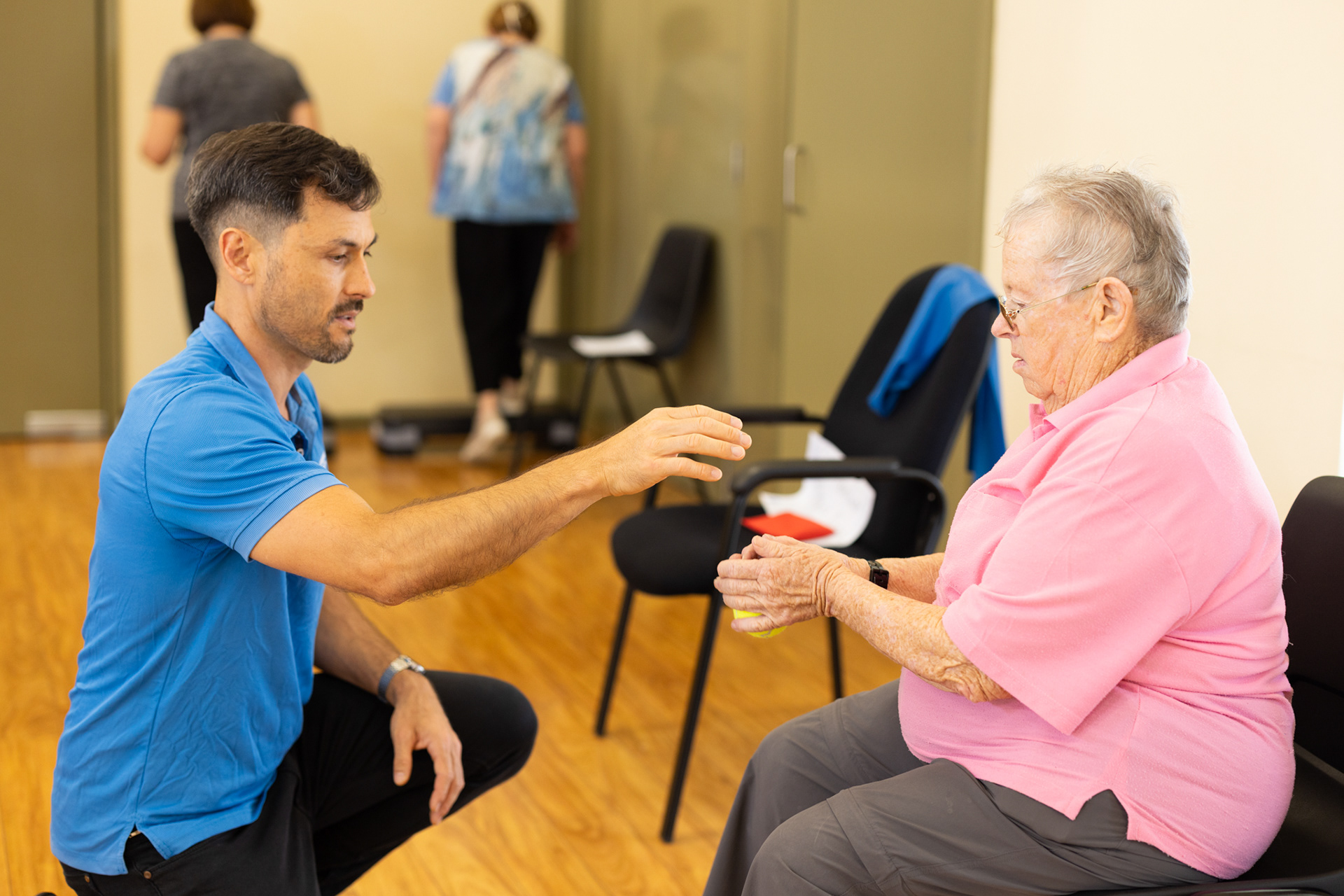
The role of allied health delivering services
Allied health professionals:
- Help participants set therapy goals
- Ensure allied health services stay within budget
- Play a central role in the restorative care and end-of-life pathways
- Are essential for assessing and prescribing assistive technology and home modifications

How Providers Use the Service List
For registered Support at Home providers, the service list is the framework for claiming reimbursement from the department. Key operational points:
- All services must be delivered by appropriately qualified workers (registered clinicians for clinical services)
- Services must be documented in the participant’s care plan before delivery
- Claims are submitted through the Services Australia Provider Portal after service delivery (cashless model — no advance payments)
- Claims must reference the correct service type and stream
- Services not on the list cannot be charged to Support at Home budgets, even if the participant requests them
Final Thoughts
The Support at Home service list provides the foundation for what supports can be funded under the program.
Registered providers use this list, along with participant assessments, goals, and budgets, to build tailored care plans. Associated providers may help deliver services, but the registered provider remains responsible for quality and compliance.
Allied health plays a critical role across the entire program, ensuring that services remain evidence-based, goal-focused, and supportive of older Australians staying safely at home.
Have questions about this article? Contact Community Therapy, we’d love to hear from you.
 February 15, 2026